
Walk into any gym on a Monday evening and you’ll spot it straight away: someone squatting in plush running shoes, someone else doing box jumps in retro lifestyle sneakers, and at least one person wobbling through a heavy deadlift on a foam midsole that squishes like a marshmallow. It’s one of the most common mistakes in fitness. The wrong shoe costs you stability under the bar, puts extra stress on your ankles and knees when you move sideways, and can fall apart within weeks once rope climbs and burpees get involved.
A gym session asks a lot of one pair of sneakers. One minute you’re loading a barbell, the next you’re sprinting, skipping or jumping onto a box. So a good training shoe needs things a running shoe doesn’t have. The base should be wide, flat and firm so you stay planted when you lift, and the heel-to-toe drop should be fairly low. You want proper lateral support, so your foot doesn’t roll over the edge when you change direction quickly, and an outsole that grips rubber floors and won’t shred on the first rope climb. Then there’s cushioning: enough to make short runs and jumps comfortable, but not so much that the shoe feels mushy under load.
Right now is a good time to be shopping for one. Nike has refreshed almost its entire training lineup in the past year, and Reebok, Adidas and TYR all have shoes built specifically for CrossFit, strength work and hybrid training. Here are seven that get the balance right, whether your sessions lean towards heavy lifting, HIIT classes or a bit of everything.
Nike Metcon 10
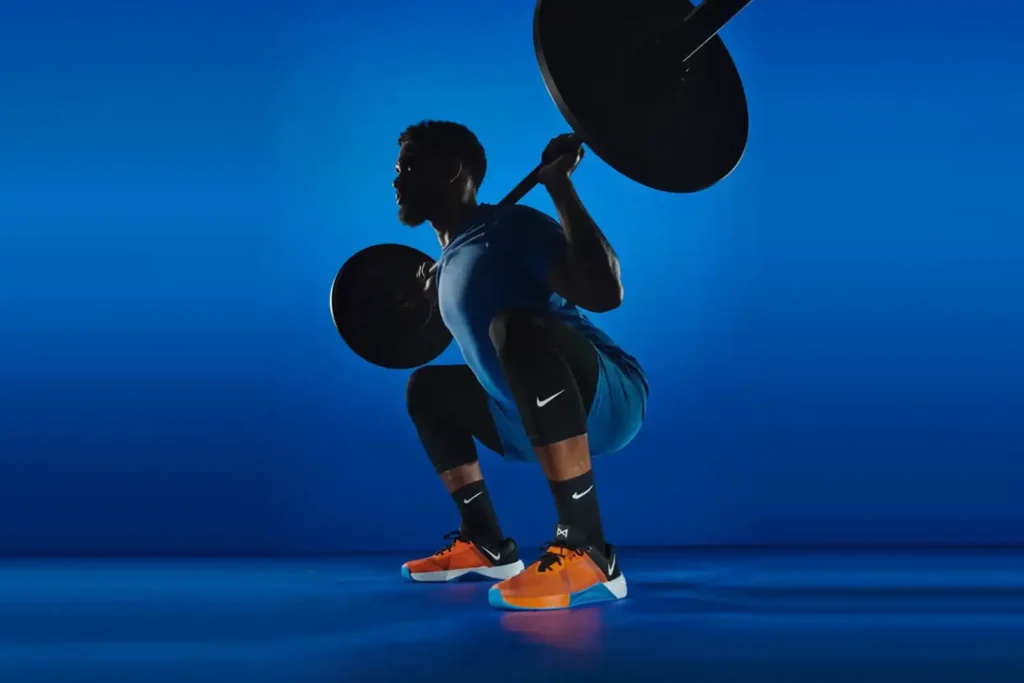
The Metcon has been the benchmark gym shoe for over a decade, and the tenth edition feels like Nike going back to basics. The last couple of versions were heavy and stiff, and a lot of people said so. The Metcon 10 is lighter and cleaner looking, and it hasn’t lost any of the stability that made it the default choice for barbell work. The rigid Hyperlift plate is still in the heel, so you get a firm platform for squats, deadlifts and Olympic lifts. Nike also redesigned the outsole, which now uses two rubber compounds and a triangular tread pattern.
The biggest change is the foam. ReactX makes this Metcon much more flexible and forgiving than the older ones, and you notice it straight away on lunges, burpees and wall balls. It’s still a lifting shoe first, so keep the running to short sprints and the odd 400 metres. But if you spend most of your session under a bar or grinding through WODs, it’s hard to find anything more complete. There’s even a little pocket at the top of the tongue to tuck your laces into, which sounds trivial until you’ve stepped on a loose lace mid-set. Expect to pay around £130, and think about going half a size up, as it runs slightly small.
Reebok Nano X5 Edge
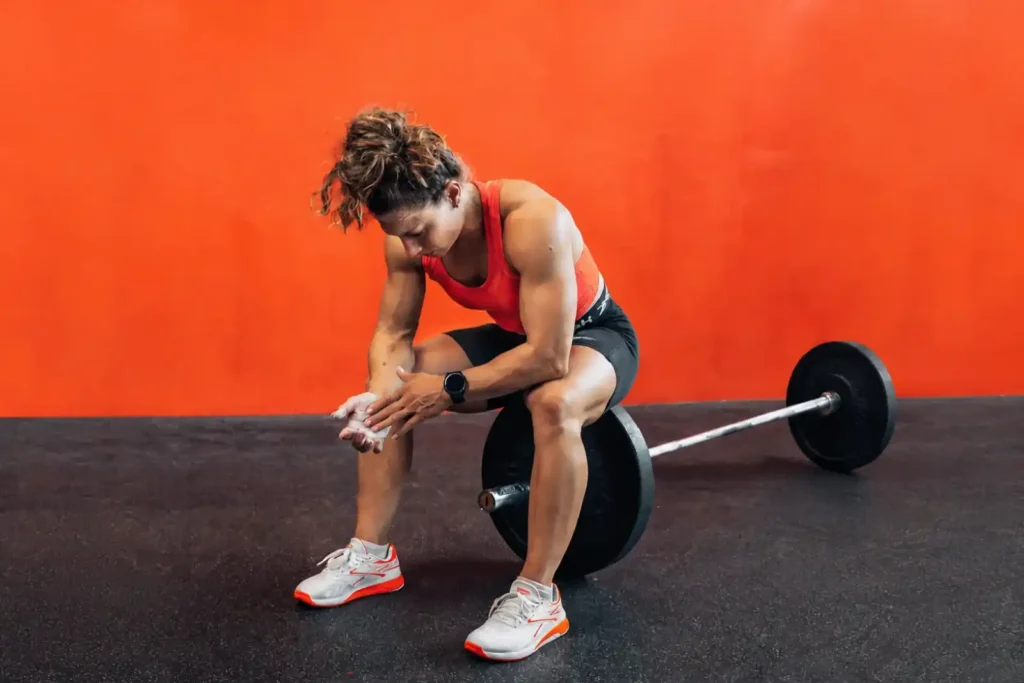
The Nano was the CrossFit shoe back when the sport was getting started, and Reebok has kept it near the top of the category ever since. The Nano X5 Edge arrived at the end of 2025 and looks a lot louder than previous versions, but the formula underneath is familiar. The DUALRESPONSE midsole is zoned: firmer and more stable in the heel for lifting, softer and springier in the forefoot for jumping, skipping or running between stations.
The decoupled MetaSplit outsole lets the forefoot bend naturally, which you’ll feel on lunges and double-unders. The FLEXWEAVE upper holds up to rope climbs and still breathes well during long sessions, and a padded collar locks the ankle in without rubbing. It has a 7mm drop and weighs around 335 grams, which puts it right between a pure lifter and a running-friendly trainer. That middle ground is why so many people use the Nano as their one shoe for everything they do inside the gym.
Nike Free Metcon 7
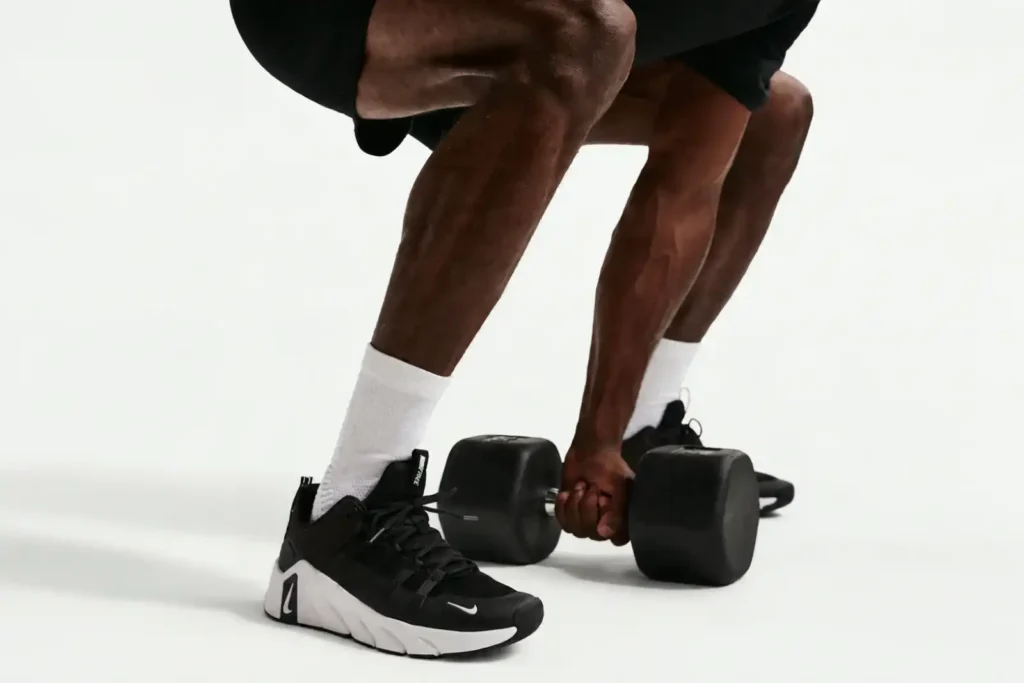
If the Metcon 10 is Nike’s lifting specialist, the Free Metcon 7 is the all-rounder. Nike calls it the most versatile training shoe it makes. It launched in April 2026 and pairs the flexible forefoot of the Nike Free line with a wide, stable Metcon-style heel. In practice you can go from kettlebell swings to box jumps to a short run without your shoes getting in the way. Nike also tested this one with coaches and with people working out at Muscle Beach in L.A. while developing it.
The main update is a new dual-foam midsole where the two pieces interlock, an idea Nike borrowed from Japanese joinery. There’s also a webbed lacing system with an inner sleeve, and it holds the midfoot much better than the previous version did. The toe and lateral side are reinforced too, so burpees and side-to-side drills won’t chew through the upper as quickly. Nike says it’s fine for runs of up to about three miles, which makes it a good fit for HIIT classes, circuits and anyone mixing cardio with light to moderate lifting. It costs around £120, a little less than the Metcon 10.
Adidas Dropset 3
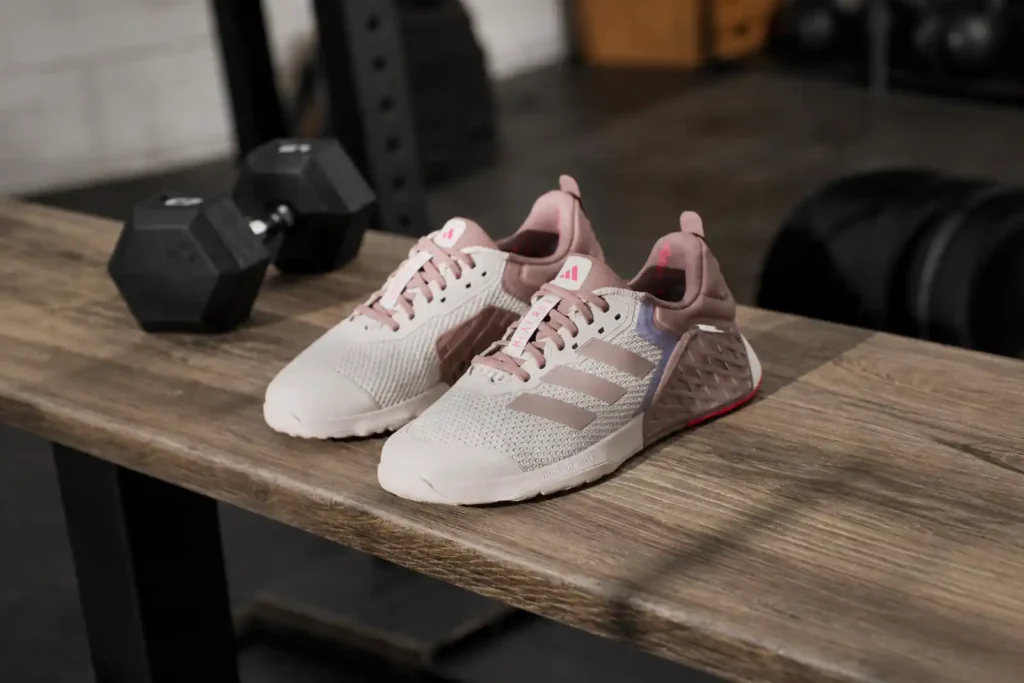
The Dropset 3 is Adidas’s shoe for people who mainly lift. It doesn’t try to be good at everything, and that’s exactly why it works so well in the weights room. Put one on and the first thing you notice is how planted it feels. The dual-density midsole stays firm through heavy squats and deadlifts, and the shallow, textured tread keeps you close to the floor. TPU panels on the sides hold the midfoot in place, and Adidas’s Geofit Sensepods wrap around the heel so it feels locked in from the first rep.
A few details make it nicer to live with. The fit is wide on purpose, to leave room for feet that swell during long sessions. You can adjust the lacing for length, and the HEAT.RDY upper is about as breathable as training shoes get. The catch is that it doesn’t do much else. Don’t run in it, and don’t pick it for high-volume conditioning. But if your training revolves around barbells, dumbbells and machines, there aren’t many shoes this stable, and at around £110 it’s fairly priced.
Nike Hybrid RN
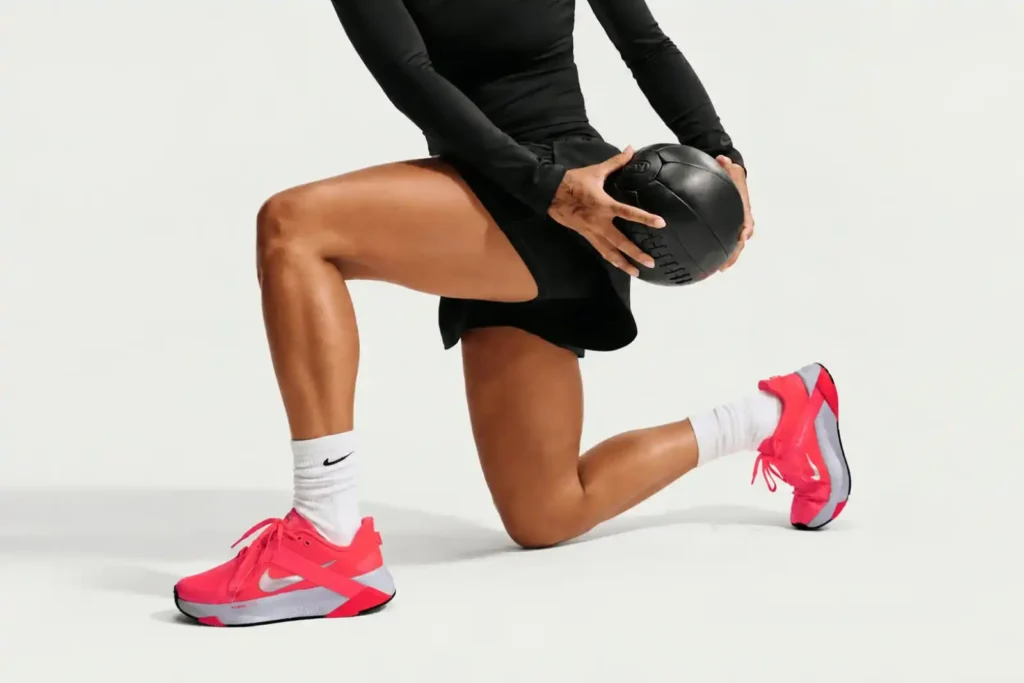
The Hybrid RN is Nike’s newest training shoe, made for people who run and lift in roughly equal amounts. That’s a big crowd these days. If you’re training for Hyrox, mixing sled pushes with treadmill intervals, or just want to do a 5K warm-up and a strength session in the same pair, this is the one to look at. It looks more like a running shoe than a gym trainer, but the platform is wider and more stable than you’d get on any runner.
Underfoot you get ReactX foam plus an Air Zoom unit in the forefoot. That gives the shoe some pop when you’re running, but it doesn’t feel squishy when you’re under a bar or behind a sled. The wide outsole combines sticky rubber for grip with tougher, high-abrasion rubber for durability. Nike also added rubber at the heel to stop the foam from spreading under heavy loads, which matters on a shoe with this much cushioning. It’s around £130, and for anyone whose sessions don’t fit neatly into one category, it’s the most interesting Nike training shoe in a while.
TYR CXT-2
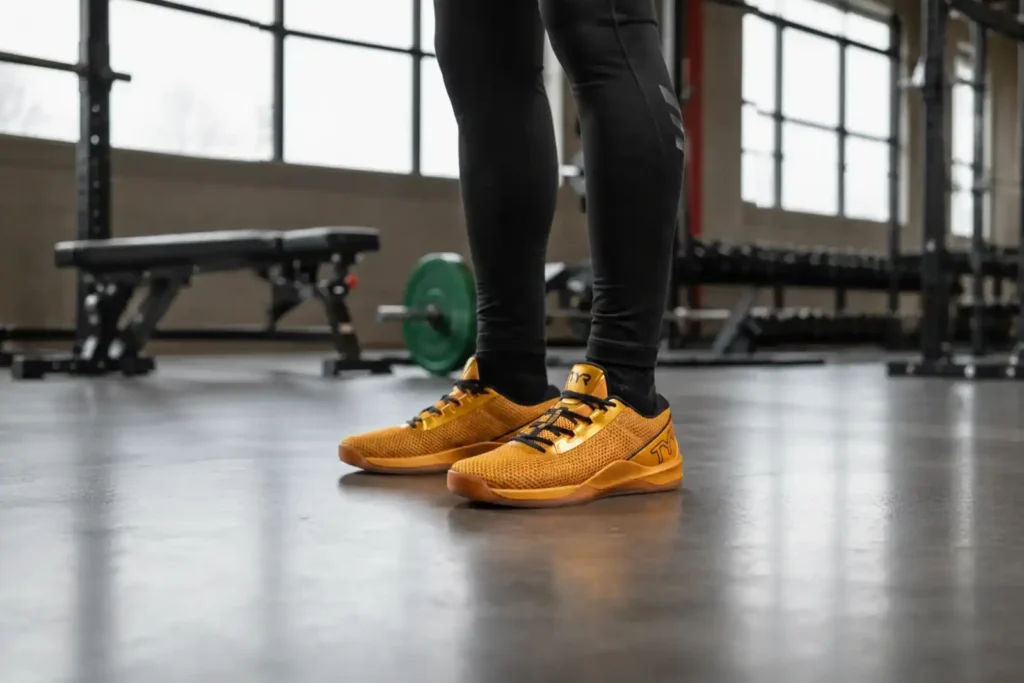
TYR is a swimming brand first, so it might seem an odd name to find on this list. Still, the CXT line has become a favourite among CrossFit athletes, and the CXT-2 is the reason. TYR took the complaints about the original CXT-1 and fixed most of them. The fit is 4mm wider, the TPU wrap around the sides and heel is stronger, and the outsole now uses TYR’s grippy TYRTac rubber, so it no longer tears on rope climbs the way the first version did.
Surge NRG foam and a high-density heel give you a stable base for heavy lifts, and it’s still comfortable for box jumps, jump rope and short metcons. With a 7mm drop and solid ankle and arch support, it leans towards lifting, so keep runs short (under a mile is about right). It’s also one of the comfiest gym shoes around, and a good pick if you’d rather not wear the same shoes as everyone else at your box.
Nike Air Max Alpha Trainer 6
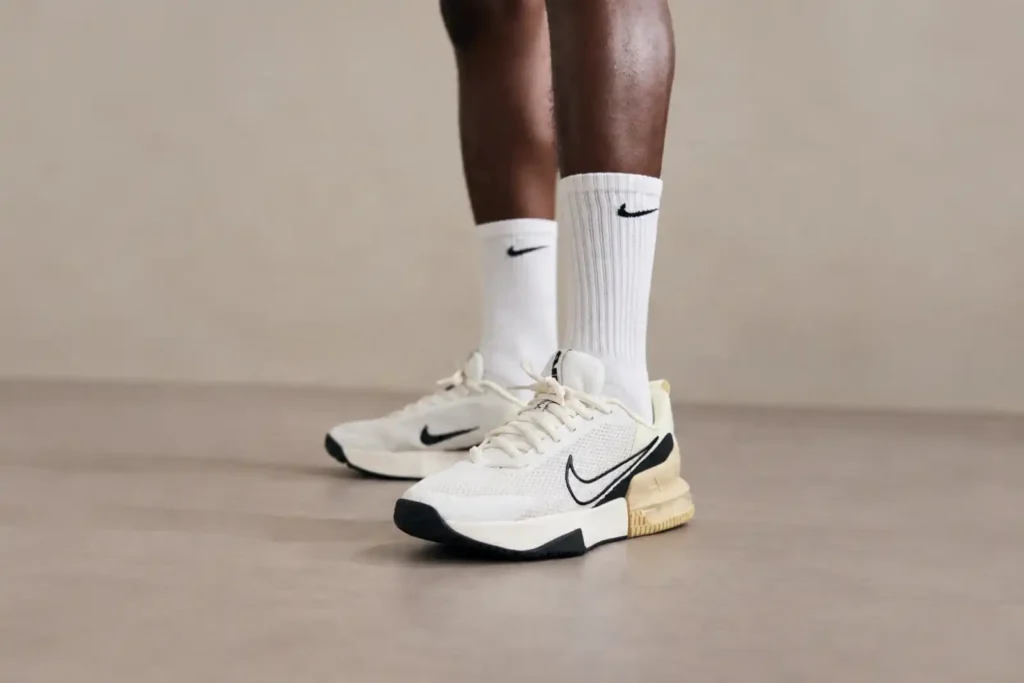
Not everyone needs a specialist CrossFit shoe. If your week is machines, free weights and the odd class, the Air Max Alpha Trainer 6 covers it for a lot less money than a Metcon. The flat, wide base keeps you from sinking during lifts, and the heel has a visible Max Air unit that Nike has tuned in this version for extra stability. It gives you something solid to push through on that last rep.
Foam in the forefoot and heel takes the edge off jumps and cardio, and flex grooves up front keep lunges and stretches feeling natural. It also looks good outside the gym, with plenty of colourways that work with joggers as well as gym shorts. One warning: it runs small, and Nike itself recommends going half a size up. For beginners, or anyone on a budget, this is the easiest recommendation on the list, and it usually costs well under £100.