
Caitlin Clark has spent her entire basketball life making shots that shouldn’t go in from where she’s standing. She broke the NCAA’s all-time scoring record at Iowa pulling up from well behind the arc, arrived in the WNBA as the most hyped rookie the league has ever seen, and turned Indiana Fever games into the hottest ticket in American sports almost overnight. Her jersey has outsold every other player in the league since her debut, and that’s despite missing large stretches of the 2025 season to injury.
Nike had been building toward this moment for a while. Clark wore player-exclusive Kobe 5 and Kobe 6 Protro colorways throughout her college and early WNBA career, and every time one leaked to the public it sold out in minutes. In August 2025 the brand made things official, unveiling her interlocking “CC” logo and confirming a full signature line was coming. Now that line has its first shoe. The Nike Caitlin 1 launches October 1 for $140, and Clark has been vocal that it isn’t just another guard shoe riding on her name — she’s called it technology Nike has never put in a basketball shoe before.
The Nike Caitlin 1 (…) isn’t just another guard shoe riding on her name — she’s called it technology Nike has never put in a basketball shoe before.
Built around Clark’s range
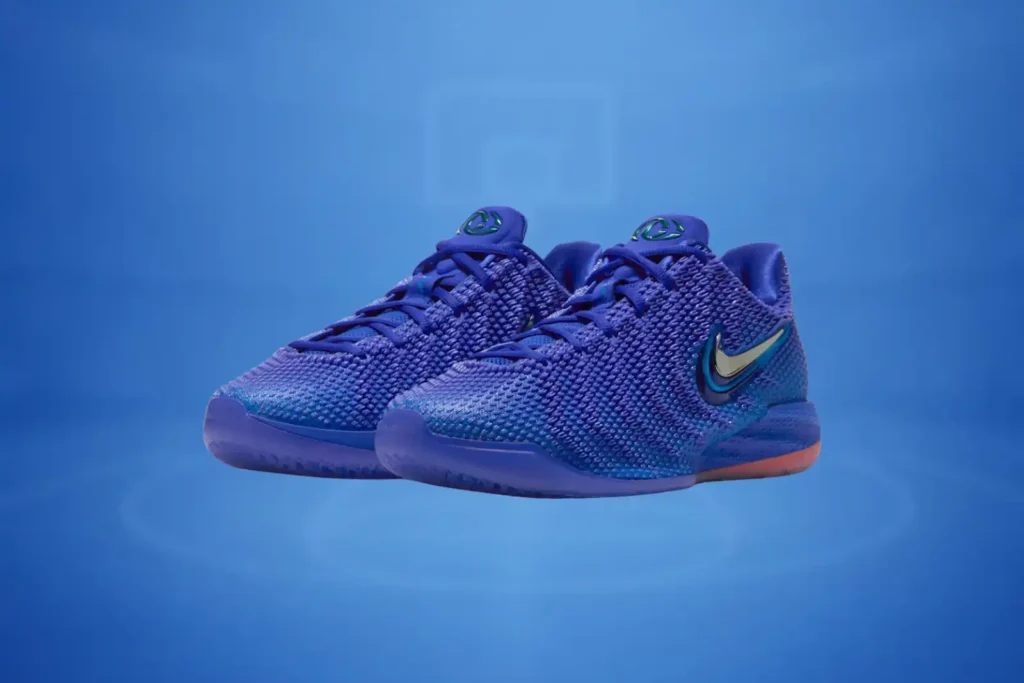
The entire design brief for the Caitlin 1 seems to start and end with one idea: distance. Clark’s game is built on pulling up from well past NBA three-point range, on a first step quick enough to create that space against defenders who know it’s coming, and on getting back on defense and into her next possession without wasted motion. Nike’s answer is Opticast, a brand-new upper construction that casts small polyurethane nodes — shaped like Cs on one side and 2s on the other, nods to her name and number — into a textured, wave-like surface that echoes the arc of the three-point line and is meant to cut drag as she moves.
Underneath, the cushioning setup leans the same direction. A forefoot Air Zoom Turbo unit sits closer to the foot than a typical Zoom Air setup, paired with Cushlon foam through the rest of the platform, aiming for quick, close-to-the-ground feedback rather than a plush, bouncy ride. It’s a shoe designed for a guard who needs to feel the floor and react fast, not one built around maximum impact protection.
In-depth technical breakdown
Upper
The Opticast upper is the headline feature, and it’s doing more than one job at once. The cast PU nodes give the shoe a distinctive, almost 3D-printed texture rather than a flat mesh or synthetic surface, and Nike says the rise and fall of that texture across the shoe is designed to reduce drag through quick transitions. Underneath the surface detailing sits a lightweight engineered base built for lockdown without adding bulk, which matters for a guard shoe that needs to disappear on foot rather than fight it. The design also carries a fair amount of personal detail — Clark’s “CC” and “22” worked into the texture, a double Swoosh nodding to her initials and the arc, and outsole callouts like “Shoot more threes” and “From anywhere” that read like a mission statement stitched into the shoe itself.
Midsole
Cushlon foam forms the base of the platform, and Nike has paired it with an articulated forefoot Air Zoom Turbo unit sitting close to the foot from edge to edge rather than tucked deep into the midsole. On paper, that combination should favor players who live on quick direction changes, step-backs and sudden re-acceleration over players chasing a soft, plush landing. A mid-foot shank adds torsional support through those cuts. It’s worth flagging that this is Nike’s stated design intent rather than a verdict from months of retail wear — the adult pair only hits shelves October 1, so independent testing across different courts and sizes is still to come.
Outsole
The outsole uses a radial traction pattern built around the forefoot, which should suit a guard who plants and pivots more than one who drives in straight lines. It carries the same message details as the upper — “It was never a long shot” split across both feet — tying the whole shoe back to Clark’s shooting identity down to the tread. Early sightings, including Clark’s own preseason debut in the shoe where she scored 26 points, have been positive on court feel, though a handful of early reactions have flagged the toe area as light on protection for players who prefer a sturdier guard shoe.
Colorways worth knowing
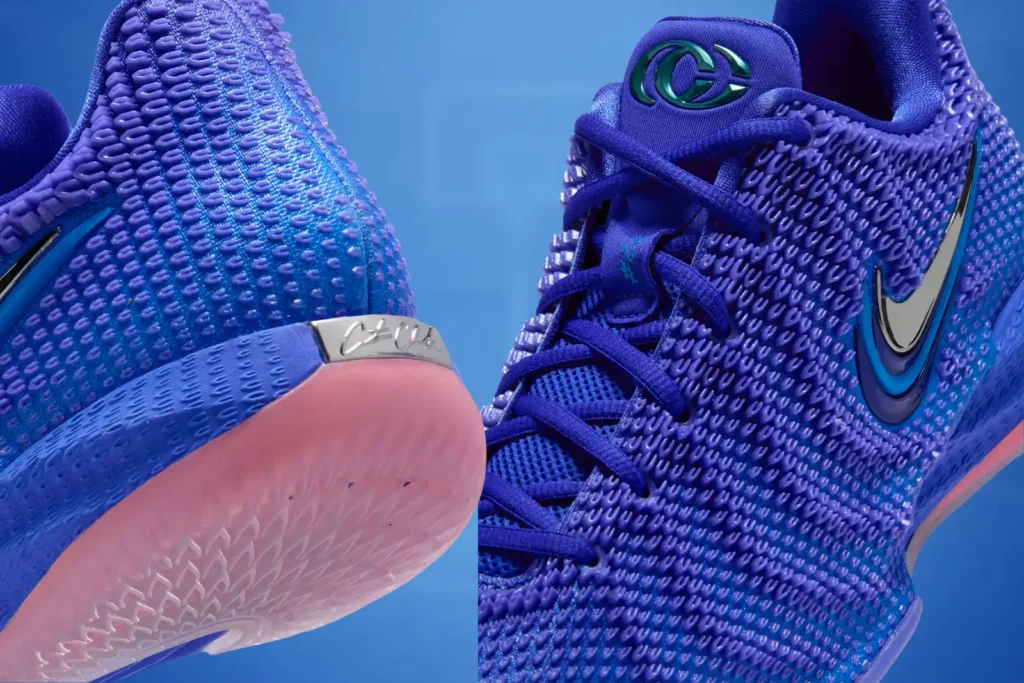
The debut “Racer Blue” colorway drops October 1 in adult, grade school and preschool sizing, priced at $140, $115 and $105 respectively. It leans into blue rather than the Fever’s red-and-gold, a deliberate choice tied to Clark’s own basketball journey from Iowa onward. Nike isn’t slowing down after launch, either — a run of holiday colorways is already confirmed, including “Yellow Zest,” “Snow White,” “Hot Punch,” “Laser Orange” and “Purple Venom,” with further releases like “Emerald Rise,” “Friendship Bracelet” and “Electric Green” carrying the line into early 2027. For a debut signature shoe, that’s an unusually fast colorway cadence, and it signals how much weight Nike is putting behind this launch.
Who should wear these
On paper, the Caitlin 1 is built for guards and lighter wings who play a tempo-based game — quick first steps, step-backs, pull-ups from distance — rather than players looking for a heavily cushioned, high-impact shoe. The close-to-foot forefoot Zoom unit and lightweight Opticast upper both point toward court feel and responsiveness over plush protection.
The honest caveat is that this is still a pre-release read. Nike has published the full spec sheet, the price and the release date, and Clark has worn the shoe publicly with good early results, but there isn’t yet a normal pool of retail pairs to test sizing, break-in behavior or traction on dusty courts. If you’re a guard who’s been waiting for a shoe built specifically around a three-point-heavy game, the Caitlin 1 is worth watching closely at launch — just go in expecting a debut model rather than a fifth-generation refinement.