
If you’ve ever tried to finish a burpee circuit, a round of jump squats, and a set of deadlifts all in the same workout session, you already know what HIIT demands from your body — and from your shoes. High-Intensity Interval Training is one of the most effective and time-efficient training methods available, combining short bursts of maximum effort with brief recovery periods in a format that pushes your cardiovascular system and muscular endurance at the same time. A typical HIIT session might alternate between sprinting and squats, mix kettlebell swings with box jumps, or run through a series of explosive plyometric movements back to back. The variety is part of what makes it so effective — and also what makes choosing the right footwear such a specific challenge.
The science behind HIIT is well established. By working at or near maximum capacity during the effort intervals, you force your body to consume oxygen at a higher rate than it can supply, creating what’s known as EPOC (Excess Post-Exercise Oxygen Consumption) — the afterburn effect. This means your body continues burning calories at an elevated rate for hours after the workout ends, making HIIT exceptionally efficient for fat loss, cardiovascular conditioning, and metabolic health. Beyond the calorie burn, regular HIIT training has been shown to improve VO₂ max, increase insulin sensitivity, build lean muscle, and even benefit cardiovascular health markers more effectively than moderate steady-state cardio done for longer periods. All of this in sessions that typically last between 20 and 45 minutes.
The science behind HIIT is well established. By working at or near maximum capacity during the effort intervals, you force your body to consume oxygen at a higher rate than it can supply, creating what’s known as EPOC (Excess Post-Exercise Oxygen Consumption) — the afterburn effect.
But HIIT also puts a unique set of demands on your footwear. You need a shoe that can handle explosive jumps and landings without bottoming out, transition smoothly from a sprint to a weighted squat, hold your foot securely during lateral cuts and multidirectional drills, and provide enough traction to grip a gym floor during fast-paced circuits. That’s a very different ask from a pure running shoe or a strict lifting shoe, and it’s why a dedicated training model makes such a difference. The right pair of HIIT sneakers should offer a stable heel platform for strength-based movements, a flexible and responsive forefoot for dynamic exercises, good lateral support to protect the ankle during quick direction changes, and cushioning that absorbs impact without feeling spongy or unstable underfoot. With that in mind, here are five of the best options available right now.
Nike Free Metcon 7
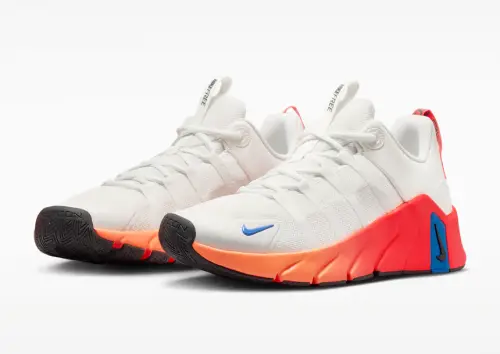
The Nike Free Metcon 7 is Nike’s most versatile training shoe, and its seventh iteration represents the most refined version of a formula that has been perfected over nearly a decade. The key to its design is the combination of two distinct foams in the midsole — a softer, more flexible compound up front that allows the forefoot to move naturally during dynamic exercises, and a firmer, flatter heel that locks you in during weighted movements. This split personality makes the shoe equally at home during a burst of box jumps as it is under a barbell. The new version also introduces a webbed lacing system paired with an inner sleeve that wraps the midfoot securely, improving containment and reducing foot shift during lateral drills. Reinforced sidewalls and additional material around the toe tip mean the shoe holds up even under the abuse of rope climbs and sled pushes.
What sets this iteration apart from its predecessors is the interlocking dual-foam midsole construction, inspired by the joinery technique used in Japanese woodworking, where the two foams interlock rather than simply meet. The result is a more cohesive, durable unit that transitions smoothly between the flexible forefoot and stable heel. The shoe handles HIIT sessions exceptionally well, feeling responsive and energetic through plyometric sequences while remaining grounded and planted during the strength portions. For athletes who refuse to choose between cardio and weights, the Free Metcon 7 remains one of the strongest all-around options in the market.
Reebok Nano X5
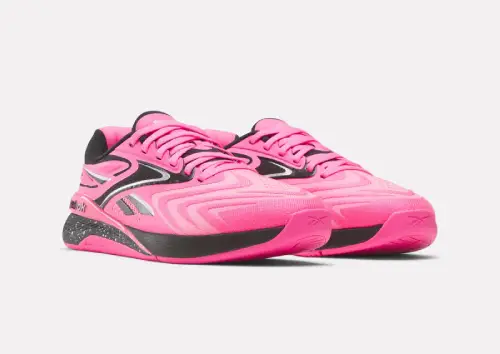
Few training shoes carry the legacy and credibility of the Reebok Nano series, and the X5 represents the most well-rounded iteration the line has produced. Where previous versions sometimes leaned too heavily toward either lifting or agility work, the Nano X5 strikes a more balanced profile through its reworked DUALRESPONSE midsole — a dual-density EVA compound that delivers firmer support at the heel for stability under load while remaining noticeably more pliable and responsive through the forefoot for jumps, burpees, and cardio intervals. The updated Flexweave knit upper is another significant upgrade, offering a more accommodating fit with extra room in the toe box, better breathability during intense sessions, and a flexibility that makes the shoe feel less rigid and more natural in movement.
The Nano X5 handles the full spectrum of HIIT demands with confidence. Lunges, box jumps, rope skipping, squats, and short sprint intervals all feel smooth and controlled, while the Decoupled Metasplit outsole flexes in multiple directions to support the constantly changing movement patterns of circuit training. The 7mm heel-to-toe drop provides a stable, grounded base without feeling flat, and the multi-directional tread pattern grips gym surfaces reliably even when things get sweaty. If you’re looking for a shoe that can anchor your heaviest compound lifts and then keep up with the cardio rounds without skipping a beat, the Nano X5 is one of the most capable options in this category.
Nike Motiva
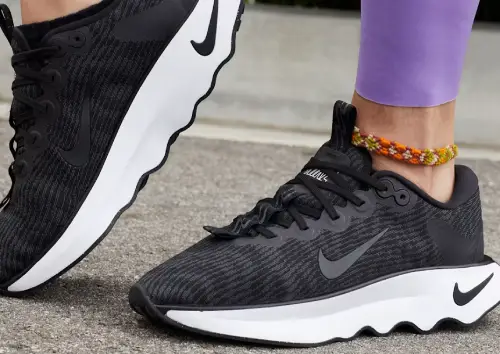
The Nike Motiva is a different kind of training companion — one designed not for the explosive power phases of HIIT, but for what comes before and after them, and for the lower-impact moments woven throughout. Built around an exaggerated rocker geometry and a full-length Cushlon 3.0 foam midsole with a Comfortgroove outsole pattern, the Motiva is Nike’s first dedicated walking shoe, engineered to propel the foot forward naturally with each step and absorb impact with generous cushioning throughout. Its shock absorption measurements place it among the most cushioned shoes Nike has ever produced, and the energy return from its midsole adds a lively, springy quality that keeps the legs feeling fresh during longer warm-ups, active recovery intervals, and cool-down circuits.
The Motiva’s value within a HIIT context lies in its ability to support the transitions between high-intensity blocks — the moments of active rest, mobility work, and lower-impact movement that are just as important as the intense bursts themselves. The widened toe box and knit upper give the foot room to splay naturally, reducing fatigue during extended sessions, while the rocker profile naturally encourages good heel-to-toe mechanics during walking-paced recovery intervals. It’s not a shoe for heavy lifting or quick lateral cuts, but for those who build their HIIT sessions around a mix of walking intervals, bodyweight circuits, and mobility-focused cooldowns, the Motiva is an excellent and often overlooked choice.
Adidas Dropset 3
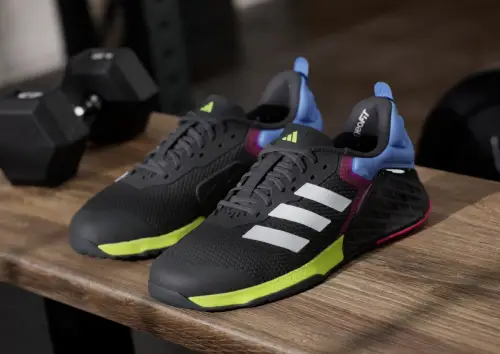
The Adidas Dropset 3 is built with one primary purpose: to be the most stable and performance-ready strength training shoe Adidas has ever made, and it succeeds with considerable authority. Its dual-density midsole pairs a softer foam in the forefoot for cushioning during dynamic movements with a denser, firmer compound in the heel that creates an almost platform-like base for weighted exercises. With a 6mm drop and a flat outsole design, the shoe distributes weight evenly across the foot during squats, deadlifts, and Olympic lifts, promoting proper alignment and maximizing force transfer from foot to floor. The HEAT.RDY upper keeps airflow moving through the shoe during intense sessions, while the TRAXION rubber outsole provides multi-directional grip on gym surfaces.
Where the Dropset 3 earns its place in a HIIT rotation is in the strength-dominant portions of the workout — the moments when you’re pressing, squatting, or hinging under load and need your platform to be absolutely non-negotiable. The wide toe box encourages natural toe splay, which improves balance and stability, and the secure lacing system locks the midfoot in place even during explosive transitions between exercises. It’s a more specialized tool than the other models on this list, and it works best when your HIIT programming includes substantial barbell or dumbbell work alongside the cardio elements. For those sessions, the Dropset 3 is one of the most reliable and technically sound choices available.
Nike Reax 8 TR
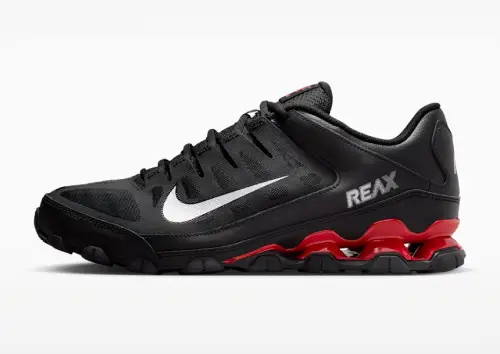
The Nike Reax 8 TR is a classic that refuses to go away, and with good reason. Originally released over a decade ago and periodically restocked since, it occupies a unique position in Nike’s training lineup as a no-frills, reliable workhorse built on the Reax cushioning platform — a system of responsive columns in the heel that absorbs impact and returns energy without adding bulk or instability. The synthetic leather and textile upper is durable and structured, wrapping the foot in a snug, locked-down fit through a dynamic midfoot lacing system that keeps everything secure during lateral movements and multidirectional drills. The solid rubber pods on the outsole provide strong grip across gym floors, rubber mats, and hardwood surfaces, while deep flex grooves in the forefoot allow the foot to bend naturally during dynamic exercises.
What the Reax 8 TR offers that newer, more engineered models sometimes sacrifice is simplicity and groundedness. The flat sole and firm construction keep you close to the floor during strength work, giving you a confident, planted feeling during squats and split lunges. Its grip and lateral support hold up well during the kind of quick-change HIIT drills that put side pressure on the ankle, and the straightforward design means there are no overly soft zones that compress under load or cause instability. It’s not the lightest shoe on this list, and it won’t win any awards for cushioning on longer cardio intervals, but for those who value stability, durability, and a proven track record at an accessible price point, the Reax 8 TR remains a deeply sensible pick.